• About
  • News
  • Recordings
  • Media
    • Gallery
    • Videos
    • Podcasts
  • Contact

Stories

Why Cramer’s Piano Quintets Deserve to Be Played Again – Preparing Piano Quintet No. 3, or Why Good Manners Ruined His Career

January 20, 2026 by luismagalhaes.com
Conway hall, cramer, I Musicanti, Piano

Johann Baptist Cramer had a serious problem. He was excellent at everything he did.

He was admired by Beethoven. He was one of the most respected pianists in Europe. He wrote music that fits the hands, makes musical sense, and does not collapse under pressure. Naturally, history responded by quietly ignoring most of it.

Johann Baptist Cramer is remembered today almost exclusively for piano studies. This is like remembering Ferrari solely for the spare parts catalogue. Useful, yes. But it misses the point.

Cramer’s Piano Quintets suffer from a fatal flaw in modern concert life. They behave. They do not scream. They do not posture. They do not attempt to impersonate an orchestra while the strings cling on for dear life. They assume that everyone involved knows what they are doing. This assumption alone has kept them out of the repertoire.

Piano Quintet No. 3 is a masterclass in proportion. The piano part is busy, articulate, and beautifully written, but it is never allowed to become the centre of the universe. This is not a concerto with string decorations. This is chamber music. The piano is expected to listen. To blend. To occasionally shut up. An outrageous demand.

On a modern concert grand, this becomes immediately uncomfortable. The instrument is large, powerful, and keen to help whether you asked for it or not. Cramer did not write for this. He wrote for clarity. Which means the pianist must spend a considerable amount of time doing less. Less pedal. Less sound. Less self-expression. More judgement.

This is harder than it sounds. The piece has no patience for interpretive freelancing. It rewards precision and punishes optimism. And yet, when done properly, the music is deeply satisfying. It has wit without punchlines. Charm without flattery. Confidence without noise. An approach that, if applied more broadly, would solve many problems.

For audiences, I am curious about the effect it might have. I wonder if they will listen, follow lines or hear conversation rather than competition.

So why is Cramer rarely played. Because he sits in the wrong place historically. Too late to be purely Classical. Too early to indulge in Romantic excess. Too well balanced to fit the modern appetite for extremes. He does not fit a narrative. He fits music.

Cramer’s Piano Quintet No. 3 will be performed on 15 February at Conway Hall, London, in a programme that unintentionally proves the point. Beethoven’s Piano Quartet Op. 16 opens with elegance and a sense of humour sharp enough to survive two centuries. Cramer follows, reminding everyone that good writing does not need to announce itself. Schubert’s “Trout” Quintet closes the evening by cheerfully ignoring all restraint and getting away with it.

Programme
6.30pm
Beethoven. Piano Quartet in E flat Op. 16
Cramer. Piano Quintet No. 3 in B flat Op. 79
Schubert. Quintet in A major “Trout” D 667

Performers
Martyn Jackson. violin
Robert Smissen. viola
Ursula Smith. cello
Leon Bosch. double bass
Luis Magalhães. piano

Cramer does not need rescuing. He needs performers willing to play what is written, listeners willing to pay attention, and a general reduction in unnecessary drama.

Which, admittedly, makes him a difficult sell. Come join us! Tickets here.

Gaia Festival, Thun. Or: How Having Nothing To Do Became My Greatest Achievement

December 1, 2025 by luismagalhaes.com
atelier, frank's, gaia, thun

I went to the Gaia Musikfestival in Thun with a shocking amount of free time.

This is unusual for a music festival. Normally you are busy. Rehearsing. Stressing. Pretending to be busy while scrolling your phone with purpose.
Not here.

Here, I had time.
Glorious. Swiss. Uninterrupted time.

So did Casper Vos.

This was dangerous.

Two pianists. Partners at home. Minimal responsibilities. A picturesque town. This is how stories begin that end with someone saying, “We should not tell anyone about this.”

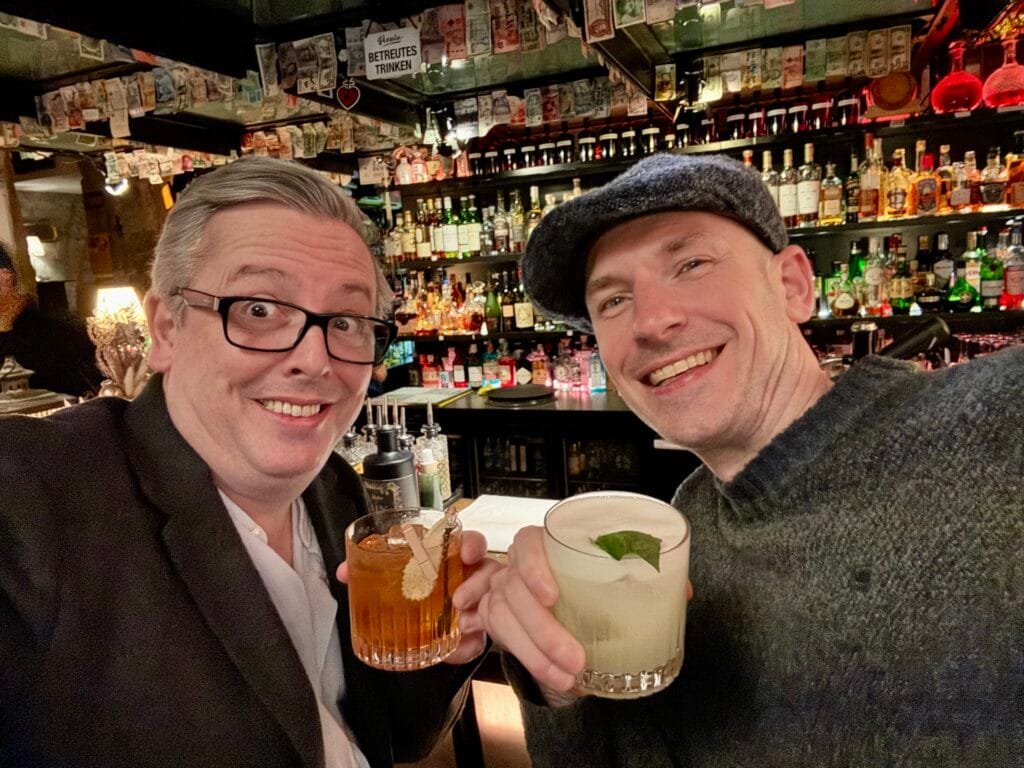
Naturally, we found Atelier.

Atelier is not a cocktail bar that wants attention. It does not wave menus. It does not lecture you about ice. It does not describe drinks using words like “journey” or “forest floor”.
It simply sits there, confident, like a bar that knows you will eventually give in and loose whatever dignity you have left.

Inside, bottles line the walls in a way that suggests expertise, mild chaos, and excellent life choices. The lighting makes everyone look like a better version of themselves. This is suspicious and should probably be regulated.

Then came Frank’s Ingwer.

Frank’s Ingwer is not subtle. It does not ease you in. It announces itself like a friendly slap. Ginger with opinions. Ginger with posture. Ginger that makes you say, “Oh. So that is how that is supposed to taste.” She introduces herself, “Oh HI! I am Ginger! You come here often??”.

Atelier, to its credit, does not interfere. They do not overthink it. They serve it like responsible adults who trust ingredients and their customers. A radical concept.

Evenings followed a clear structure.

Arrive.
Sit down.
Order something sensible.
Immediately order something less sensible.

Conversations drifted freely, mostly because neither of us had anything urgent to escape to. Music was discussed. Life was discussed. Absolutely nothing was discussed at length and with great enthusiasm.

This is the underrated luxury of festivals when you are not overbooked. You are not “on”. You are off. You exist. You laugh. You realise you are a human and not a scheduling problem.

Meanwhile, Thun continued being aggressively beautiful. Mountains. Silence. Viola players. As if the town itself was judging you gently but firmly.

By the end of the week, I had learned several things.
First. Good festivals are defined by what happens offstage.
Second. Free time is a gift and should be handled carefully.
Third. Frank’s Ingwer should be exported worldwide immediately.
Fourth. Pianists with nothing to do are extremely cheerful and mildly dangerous.

I came to Thun for music.
I stayed upright because Switzerland is efficient.
And I will return knowing exactly where to go when there is nothing to do again.

Mozart, Beethoven, Schubert, Brahms

May 9, 2025 by luismagalhaes.com
Arda Records, Artway Management, Beethoven Op. 125, Brahms Op. 119, Casa da Música event, CD release 2025, classical music CD release, classical music concert, Gerhard Roux sound engineer, live classical music, Luis, Mozart Fantasies, music events in Porto, Porto concerts, Schubert Sonata, Yamaha Artists Services, Yamaha piano

Luis Magalhães releases on 13 May 2025 a new album dedicated to the masters of the European tradition.

A dialogue with the masters!

In his most recent recording, pianist Luís Magalhães invites us on a journey through the universe of four of the most iconic composers in the piano tradition: Mozart, Beethoven, Schubert and Brahms. With the sensitivity and interpretative mastery that distinguish him, Magalhães builds a bridge between the expressive worlds of these geniuses, revealing both the continuity and contrast in their musical languages—from Mozart’s luminous clarity to Brahms’s romantic density. In each interpretation, he demonstrates profound respect for the spirit of the score, while also imprinting a personal vision that enriches the listening experience and renews the music for the audience.

Tracklist

CD 1

Schubert: 3 Klavierstücke, D.946

1          I. Allegro assai 10:23

2          II. Allegretto 13:38

3          III. Allegro 5:16

Schubert: Sonata in B-flat major, D.960

4          I. Molto moderato 20:40

5          II. Andante sostenuto 10:26

6          III. Scherzo. Allegro vivace con delicatezza — Trio 3:59

7          IV. Allegro ma non troppo 8:38

CD 2

1          W. A. Mozart: Fantasia in D minor, K.397/385g 6:56

2          W. A. Mozart: Fantasia in C minor, K.475 14:25

L. v. Beethoven: 6 Bagatelles, Op.126

3          I. Andante con moto, cantabile e con piacevole 3:59

4          II. Allegro 3:11

5          III. Andante, Cantabile ed espressivo 3:08

6          IV. Presto 4:15

7          V. Quasi allegretto 2:57

8          VI.Presto — Andante amabile e con moto 4:12

J. Brahms: 4 Klavierstücke, Op.119

9          I. Intermezzo: Adagio 4:01

10        II. Intermezzo: Andantino un poco agitato 5:00

11        III. Intermezzo: Grazioso e giocoso 2:10

12        IV. Rhapsodie: Allegro risoluto 4:58

Get Ready to Party Like It’s 1799! CD Release Concert at Casa da Música

February 27, 2025 by luismagalhaes.com
Arda Records, Artway Management, Beethoven Op. 125, Brahms Op. 119, Casa da Música event, CD release 2025, classical music CD release, classical music concert, Gerhard Roux sound engineer, live classical music, Luis, Mozart Fantasies, music events in Porto, Porto concerts, Schubert Sonata, Yamaha Artists Services, Yamaha piano

Hello Music Lovers,

Mark your calendars and polish your best shoes (or don’t, we are all friends here)! I’m throwing the classical bash of the year to celebrate the release of my latest solo album. Join me on May 13th at 21:00 at the magnificent Casa da Música in Porto, where we’ll make Beethoven wish he could time travel to 2025! Perhaps to tell me I got it all wrong…

What’s On The Program?

I’ll be playing everything from the heart-wrenching melodies of Schubert to the dramatic flair of Beethoven, with a splash of Mozart’s whimsy and a dash of Brahms’ introspection. It’s like a “greatest hits” of classical music, except you actually have to wear pants and there are no commercials.

The Who’s Who

Big shoutout to the dream team making this happen: Artway Management for keeping the chaos in order, Artway Editions for making sure you can take a piece of the night home, and the marvelous Vanessa Pires. Not to forget Yamaha Artists Services for the sleek piano, Arda Records for capturing my good vibe, the wizard of sound, Gerhard Roux, and the Neto Rocha brothers, who tune pianos so well, they make them sing better than Ariana mucho Grande!

Why Should You Come?

Because live music beats your Spotify playlist any day! Plus, Casa da Música isn’t just a concert hall; it’s a place where the walls are steeped in music and the seats have heard more notes than Mozart could shake a stick at. Come for the music, stay for the charm, and leave with a CD that’s hot off the press!

Grab Your Tickets!

Seats are flying faster than notes at a prestissimo, so book yours now here! Whether you’re a die-hard classical fan or just looking for a reason to get out of the house on a Tuesday night, I promise an evening full of delightful tunes and maybe a few laughs.

Let’s make this a night to remember, filled with laughter, applause, and maybe just a touch of off-key singing from the audience.

See you there, where we’ll make a little history of our own at Casa da Música!

Me being cool

Why Classical Music Is Still Cool (Even If No One Admits It)

February 19, 2025 by luismagalhaes.com
Classical Music, Cultural Relevance, Music Evolution, Music Industry, Why Classical Music Matters

Let’s be honest: classical music doesn’t always have the best PR. It’s often painted as old-fashioned, overly serious, and only for those with refined tastes (or at least an inherited collection of concert attire). Meanwhile, pop, rock, and electronic music dominate streaming platforms, and orchestras worry about declining ticket sales.

But here’s the truth—classical music is still cool. People just don’t always realize it.

1. Classical Music Is Everywhere (Even If You Don’t Notice)

You might not actively stream Mahler’s symphonies, but classical music sneaks into your daily life more than you think. Film scores? Video games? That dramatic commercial soundtrack that made you want to buy a luxury car you can’t afford? All rooted in classical traditions.

  • Hans Zimmer? John Williams? Their work is drenched in the harmonic language of Wagner and Stravinsky.
  • That emotional moment in your favorite video game? Probably underscored by a string section.
  • TikTok trends? Classical music is suddenly viral again (Lacrimosa moment, anyone?).

Even if people don’t consciously sit down and listen to Beethoven’s 9th, they’re absorbing his influence through pop culture every day.

2. Classical Music Is Basically the Original Rock & Roll

Before screaming Beatles fans, there were screaming Liszt fans (Lisztomania was real). Before wild guitar solos, there were Paganini’s ridiculous violin runs that people thought were literally supernatural. Before Bohemian Rhapsody, there was Mozart’s ability to mix drama, humor, and chaos into a single piece.

Classical composers weren’t writing music for quiet museum halls—they were breaking rules, challenging norms, and making bold artistic statements. Stravinsky’s The Rite of Spring caused an actual riot in 1913. Beethoven was basically flipping off the aristocracy with his late works.

These composers were the rebels of their time, and if they were alive today, they’d probably be pushing boundaries in ways that would put some rock stars to shame.

3. Classical Music Requires Superhuman Skill (And That’s Cool)

In an era where technology can turn anyone into a “musician” with a laptop and some loops, classical music still demands something different—unfiltered human ability.

No auto-tune, no quantization, no “fix it in post.” Just years (decades!) of disciplined practice to master an instrument and communicate something deeply human. Watching a pianist rip through Rachmaninoff or a violinist play an impossible cadenza is no different from watching an elite athlete perform at their peak.

In an age of shortcuts, classical music is proof that true mastery still matters.

4. It’s Emotional Without Words

Classical music doesn’t need lyrics to hit you right in the soul. A Beethoven slow movement can break your heart without saying a single word. A Mahler symphony can feel like the entire human experience in one sitting.

That’s why it still resonates—it taps into emotions that go beyond language. It’s why movies use it to heighten drama, why people turn to it in times of reflection, and why it remains timeless.

5. It’s Changing—and That’s a Good Thing

Classical music is evolving, and that’s what’s keeping it alive. Orchestras are playing video game music. Pianists are making content for social media (yes, even TikTok). New composers are blending classical with electronic, jazz, and world music.

It’s breaking out of traditional concert halls, finding new audiences, and proving that it’s not stuck in the past—it’s just waiting for people to listen.

Final Thoughts: Classical Music Isn’t Going Anywhere

Sure, classical music isn’t topping the pop charts, but that doesn’t mean it’s fading. It’s just shifting, adapting, and finding new ways to connect with audiences. Whether it’s through film scores, digital concerts, or unexpected collaborations, classical music is still shaping the way we experience sound.

It’s dramatic. It’s rebellious. It’s emotional. It’s demanding. And it’s still cool.

People just need to be reminded. 

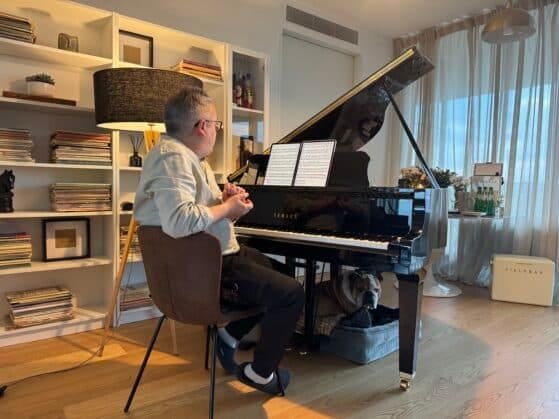
During a house concert at home.

Is Classical Music Dying? No, But It’s Changing

February 14, 2025 by luismagalhaes.com
Audience Engagement, change, Classical Music, Digital Marketing for Musicians, Music Evolution, Music Industry, Piano

If you’ve spent any time in classical music circles, you’ve probably heard the question: “Is classical music dying?” It’s an ongoing debate, fueled by shrinking audiences, struggling orchestras, and the overwhelming dominance of popular music in mainstream culture. But I don’t believe classical music is dying—it’s evolving.

The way we engage with classical music today looks different than it did a few decades ago. While some traditional structures may be struggling, new opportunities are emerging. And as artists, we need to embrace change rather than resist it.

Audiences Are Changing

For years, the classical music industry has been obsessed with the idea of an aging audience. We’ve all heard the statistics about the graying heads in concert halls. But the reality is that young people do love classical music—they’re just experiencing it in different ways.

Streaming platforms like Spotify, Apple Music, and YouTube have made classical music more accessible than ever. A listener might discover Beethoven’s late sonatas through a playlist, or stumble upon a Rachmaninoff concerto via an algorithm that paired it with a film soundtrack. The barrier to entry is lower than ever, and this presents a massive opportunity.

The challenge is no longer getting people to hear classical music—it’s getting them to engage with it on a deeper level.

The Role of Social Media and Digital Branding

For musicians, embracing digital platforms isn’t optional anymore. Whether it’s through Instagram, YouTube, TikTok, or even podcasts, artists are finding new ways to connect with audiences beyond the concert hall.

This shift is something I’ve been working on myself, especially with the help of Catalyst Music, who I’m currently working with for PR and marketing. Their approach recognizes that musicians today need more than just talent—they need strategy. Visibility matters. Storytelling matters. Finding ways to bridge the gap between tradition and innovation is key.

A well-crafted online presence doesn’t replace live performances, but it enhances them. It creates a community, keeps people engaged between concerts, and, ultimately, makes classical music feel more personal and alive.

Reimagining Performance Spaces

One of the most exciting developments in recent years is the way classical music is breaking out of traditional venues. While grand concert halls are still vital, we’re seeing more performances in unconventional spaces:

  • Chamber concerts in art galleries and museums
  • Intimate house concerts streamed live
  • Open-air performances in public spaces
  • Classical music collaborations with non-classical artists

These settings often attract audiences who wouldn’t normally step into a concert hall. They offer a more relaxed, immersive experience that feels accessible without compromising artistic integrity.

Classical Music as a Living Art Form

For classical music to thrive, we have to remember that it is not just a museum piece. Every composer we revere today—from Bach to Beethoven to Brahms—was, in their time, a contemporary artist pushing boundaries. We need to foster that same spirit today, encouraging new compositions, fresh interpretations, and bold programming that speaks to modern audiences.

It’s also worth noting that classical music has always gone through periods of reinvention. There were times when Baroque music fell out of favor, only to be revived centuries later. Romanticism gave way to modernism, which in turn evolved into new experimental forms. Change is not the enemy—it’s the reason classical music has survived for so long.

Final Thoughts

Classical music is not dying. It’s shifting, adapting, and finding new ways to remain relevant. The real challenge isn’t the lack of interest—it’s whether we, as musicians, are willing to meet audiences where they are.

With the right approach—one that blends tradition with innovation, artistry with strategy—we can ensure that classical music not only survives but thrives.

If you’re an artist looking to navigate this new landscape, I highly recommend checking out Catalyst Music. Their expertise in PR and marketing is helping musicians like me bridge the gap between the classical world and today’s digital-first audience.

Let’s keep the music alive

A Classical Music Podcast… But Unhinged

February 8, 2025 by luismagalhaes.com
Classical Music, Music and Humor, Piano, Podcast

Classical music is serious business. The composers, the history, the interpretations—all of it demands reverence and intellectual rigor. But let’s be honest: it’s also full of absurdity, drama, and moments so chaotic they deserve their own reality show.

That’s where my new podcast comes in.

What Is This Madness?

This is not your typical classical music podcast. There are plenty of those—deep dives into historical context, thoughtful discussions on performance practice, and interviews with esteemed musicians who speak in beautifully structured paragraphs. Mine, however, is a different beast.

Imagine:

  • Tchaikovsky, but badly played.
  • Theatrical levels of post-concert trauma.
  • Fake sponsors offering questionable remedies for extreme emotional recovery.
  • Pianists blaming the instrument for their mistakes (because it’s never our fault).

This podcast takes the world of classical music and pushes it into full chaos mode. Expect satire, behind-the-scenes confessions, and humor that only slightly hides the existential crises of being a musician.

Why a Podcast?

I love classical music. I’ve spent my life playing, teaching, and championing it. But I also love humor, and I think we need more of it in this world. Too often, classical music is presented as something untouchable, as if we’re all supposed to sit in silence and nod wisely. But the truth is, musicians joke, struggle, and occasionally cry over particularly cruel fingerings. This podcast is about embracing all of that—the beauty, the chaos, and the wonderfully unhinged moments that make this art form so human.

What to Expect

Each episode will be a wild mix of:

  • Ridiculous storytelling—because every musician has at least one concert horror story.
  • Musical analysis—but with a twist. (Ever wondered how Rachmaninoff’s Second Sonata would sound as a sponsor jingle? Wonder no more.)
  • Special guests (when I can convince them to join the madness).
  • Segments that make classical music feel a little less sacred and a lot more fun.

Join the Chaos

If you love classical music but also enjoy a good laugh (or if you just need some catharsis from your own musical nightmares), this podcast is for you. Stay tuned for the first episodes, and let’s dive headfirst into the beautifully absurd world of classical music—no concert etiquette required.

Until then, go practice… or just blame the piano.

Schubert, Beethoven, Mozart, Brahms—And Me

January 14, 2025 by luismagalhaes.com
Album Release, Beethoven, Brahms, Classical Music, Mozart, Piano, Recording Process, Schubert

Releasing an album feels a little like sending a message in a bottle. You record, refine, obsess over every detail, and then, eventually, you let it go—hoping it finds the right ears, the right hearts, at the right time.

On May 13, I’ll be releasing my new solo album, featuring Schubert’s B-flat Sonata and 3 Klavierstücke, Beethoven’s Op. 126, Mozart’s Fantasies in C minor and D Major, and Brahms’s Op. 119. These works are among the most personal and profound in the repertoire, and bringing them together in one recording has been a journey of both artistic and personal discovery.

Why These Works?

Choosing a program for an album is not just about selecting favorites. It’s about building a narrative—one that resonates with where I am as a musician today. Schubert’s B-flat Sonata is a piece of transcendence, written in the face of mortality. Mozart’s Fantasies are wild and free, full of contrasts. Beethoven’s Op. 126 Bagatelles, often overlooked, contain entire universes within miniature forms. And Brahms’s Op. 119—his final solo piano works—are both an ending and a quiet, intimate farewell.

The Recording Process

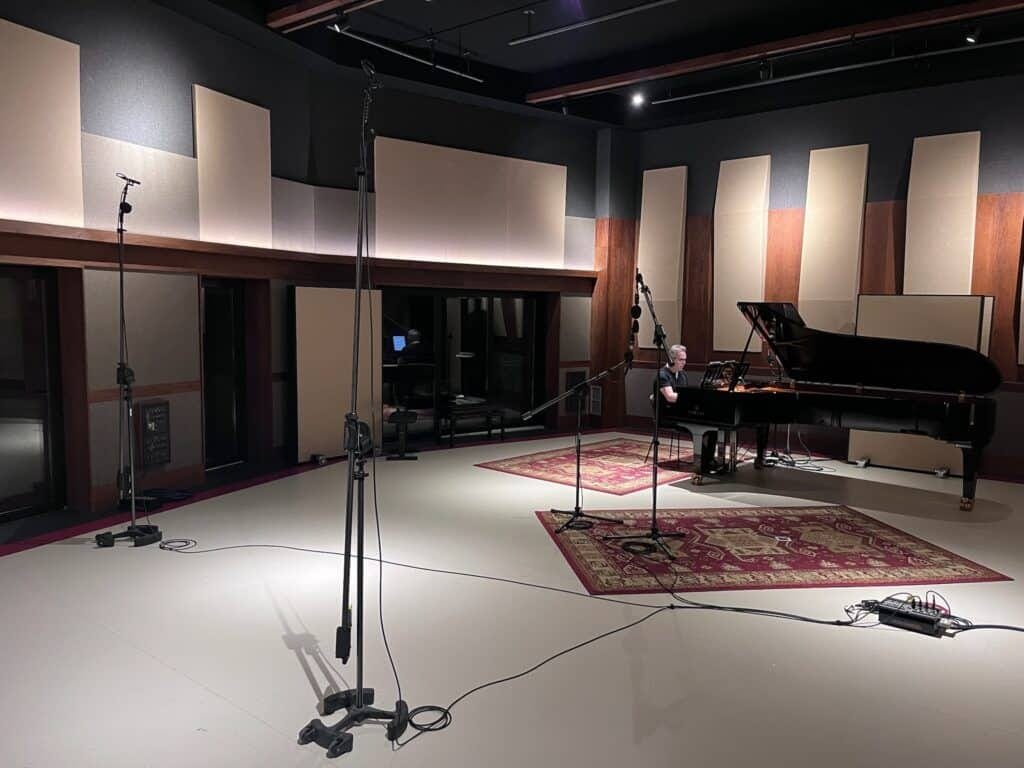
Recording these works has been both exhilarating and maddening (as all recordings tend to be). Unlike a live concert, where the energy of the moment carries you, the studio demands a different kind of presence—a patience for precision, an acceptance of imperfection, and a willingness to dive into the music again and again until it feels right.

The biggest challenge? Walking away. Knowing when to stop, when to trust that what’s there is honest and true to the music. And, of course, resisting the urge to blame the piano for everything (though, let’s be honest, that’s always a temptation).

What’s Next?

As the release date approaches, I’ll be sharing more behind-the-scenes moments—stories about the pieces, recording clips, and maybe even some outtakes of my less-than-perfect moments (because, let’s face it, those are always the most entertaining).

Classical music is often seen as something distant, something reserved for an elite few. But for me, it’s deeply human—full of humor, struggle, beauty, and absurdity. My goal with this album (and with everything I do) is to invite more people into this world, to share not just the music but the joy, the frustration, and the strange, wonderful life of being a pianist.

Stay tuned—and if you have any questions about the pieces or the process, drop them in the comments! Let’s make this a conversation.

Recent Posts

  • Why Cramer’s Piano Quintets Deserve to Be Played Again – Preparing Piano Quintet No. 3, or Why Good Manners Ruined His Career
  • Gaia Festival, Thun. Or: How Having Nothing To Do Became My Greatest Achievement
  • Magalhães & Thedéen
  • Mozart, Beethoven, Schubert, Brahms
  • Get Ready to Party Like It’s 1799! CD Release Concert at Casa da Música

Recent Comments

    Archives

    • January 2026
    • December 2025
    • September 2025
    • May 2025
    • February 2025
    • January 2025

    Categories

    • Events
    • News
    • Stories

    Copyright © 2026 Luis Magalhães – All rights reserved